Showing posts with label who's in/who's out. Show all posts

Friday, June 14, 2013

Prove There is an Audience!

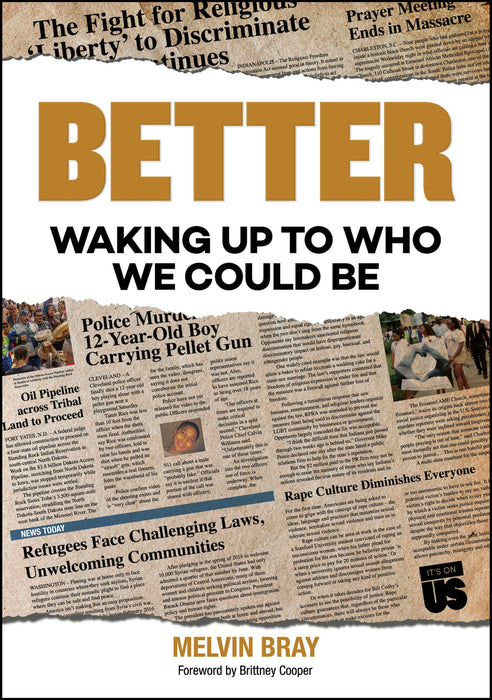
We have a unique opportunity to prove there is an audience for better--more beautiful, more just, more virtuous--faith stories. Purchase our dramatic reading of the Cain & Abel and Noah sagas. I promise a person doesn't have to be Christian to appreciate these stories--virtue is virtue.

Give them as gifts to random young people... and adults. Guilt your parenting friends into buying it. Insist every youth person at your church each have their own copy. Let's change the world to reflect the real virtues of our faith traditions one sacred myth at a time!


By the way, v.1 can be found here.


Saturday, December 03, 2011

Makes Me Wanna Holla!


(based on Genesis 7—a story of creation)

I'd like to think someone, some two or more said yes they would join Noah and his family on the ark. The way the story has been handed down to us leaves just enough room to imagine this possibility, even though the Bible does not explicitly say so. . . . Finish the story!


Guess Who's Coming to Dinner... or Not—Episode 4


(based on Genesis 7—a story of creation)

There was a lot of back and forth about whether he should, but the decision had already been made. Noah saddled the mare. Though not quite as fast, she was much more sure-footed and not as skittish as her mate.

One of the large heavy doors creaked open, Noah dashed out. Ham move quickly to close it. Watching the water roll back toward the opening, he couldn't help but think that slanting the deck for the first five feet of the entrance was a stroke of genius on his wife's part. . . . Finish the story!


Saturday, November 26, 2011

Guess Who's Coming to Dinner... or Not—Episode 3


(based on Genesis 7—a story of creation)

Pair by pair Noah and Naomi, Shem and Varda, Ham and Ital, Japheth and Nitzan led the walking animals into their stalls or cages 14 clean (as in kosher to eat) animals of each species and 2 unclean (not so kosher) or two-by-two, depending on which part of the biblical narrative you're reading. The flyers found space to roost for themselves.

It had to be more than a little unnerving to escort the first predator across the gangplank. Do you push them? Do you pull them? How much force is too much? If you you tie a rope around their necks and pull, how much lead do you give yourself? Do you dare turn your back to them? Do you think they've eaten already? . . . Finish the story!


Sunday, March 06, 2011

God With Us—Episode 2


(taken from Genesis 4—a story of creation)

If we are fortunate, we live long enough to regret a few things. Feelings of regret suggest that we have learned a bit along the way and that we would do some things differently were we to have the chance. This is not a bad thing.

Experience teaches, but there are many things we need not learn from experience. As assuredly as there are situations we would love to handle differently were they to come up again, there are just as many choices the results of which we wish we could undo, but we can't. Our choices often set off a chain of reactions that are far beyond our ability to control. We can only choose the seeds we plant and what we feed them, but we don't get to choose whether, when or how they grow.

Humanity doesn't seem particularly mindful of this truth in our story . . . Finish the story!


Saturday, February 26, 2011

God With Us—Episode 1

(taken from Genesis 4—a story of creation)


The story of the talking snake is often told as the story of how sin entered the world, and perhaps it is—if not in terms of an exact event, definitely the story of how humans foolishly make room for sin time and time again. However, neither change nor changeability were sin. So even though much changes after the man and the woman's encounter with the talking snake, the creation saga says nothing to suggest that before this point the world was static and sterile, unchangeable and unchanging. To the contrary, the way the stories are told, life was full of promise and possibility, action and adaptability. God would make a move (God created); then humanity would make a move (humanity named): Creator initiating, creation responding, creation initiating, Creator responding: round and round it goes. And if the creation stories are given their due, these moves had likely been happening for some time: all creation growing, learning, evolving, changing.

Perhaps the most impressive thing about the creation saga is that no matter how poor humanity's choices are Elohim chooses to come with them. They never endure the consequences of their short-comings alone. In fact, Elohim never takes back her initial judgment that, as far as she is concerned, humanity is "good". The man and the woman's choices and misconceptions haven't changed Elohim's mind; the man and the woman just misplace their God-given imaginations for that good. I guess it's true: what we don't use, we lose. But that's not to say it has to be lost forever.

So Eden becomes unwelcoming or uninhabitable. The man and the woman are forced out into the wilderness to make their way in the world, and where is God? Right there coaching them through it.

I can imagine Elohim initiating a conversation that goes something like, "So where are we going?"
"What do you mean 'we?'"
"I'm going with you, of course."
"But your place is there, back in the garden, back in paradise."
"Says who? . . . Finish the story!


Friday, January 29, 2010

The Pursuit of Respectability—Episode 2


(from Ezra, Nehemiah and Isaiah 56—a story of inauguration)

One would think that the vehement exclusion of one group—foreigners—for the sake of increased respectability would be enough, but as is often the case with this kind of thing, respectability is seldom satisfied with the exclusion of just one group of 'outsiders.' To do it once is to become addicted. It didn't take long before the ever more respectable Israelite insiders had compiled for themselves a growing list of outsiders to pick on: foreigners, Israelites married to people of foreign descent, the children of mixed marriages (all of whom coincidentally were longtime residents of the land these returnees from Babylon were trying to reclaim) had to go; those without land, women, children born out of wedlock, eunuchs (sexual minorities), weren't banished but were afforded few or no political rights. Only the most respectable could have full rights in the temple assembly. Only they could retain God's favor. At least that's what Nehemiah, Ezra and those most like them had come to believe.

Not everyone agreed . . . Finish the story!


The Pursuit of Respectability—Episode 1

(from Ezra, Nehemiah and Isaiah 56—a story of inauguration)

With the completion of the wall around Israel's capital city, Jerusalem, there arose a wave of national pride. It had only taken fifty-two days of focused effort. The repatriated exiles, the returnees from Babylon, were excited about being recognizable as a nation again, no longer the conquered and displaced people whose gentry had been carried off into bondage and whose peasants had been left to eek out subsistence on the surrounding lands. And as is often the case, as the returning gentry felt better about themselves, they also felt better about how God felt about them. The possibility of God's renewed pride for Israel was exhilarating. Had he not already extended his favor by allowing them to return and restore the temple and the city walls?

Though the total city had not been rebuilt, the 3 most important symbols of a promising future had been. The first was the temple, a symbol of God's abiding presence. Now the walls and gates. Walls and gates are symbols of a nation's self-determination. Like the walls of your bedroom which define the space you call "yours" and the door to your bedroom which limits access (even if it stays open all the time), Israel's walls and gates said, "This is our city, and we decide who gets in." Gates and walls also give a nation the ability protect itself as necessary. And wasn't that what God wanted? Wasn't that why he had allowed them to return: to redefine themselves and to protect that renewed vision?

That is exactly what Nehemiah, former cup-bearer to the king of Persia appointed governor of Israel, and Ezra, former scribe to the king of Persia commissioned as high priest, believed. Once the physical walls that defined who Israel was as a nation were complete, these two men believed it was time to erect by analogy the cultural walls that would help define the restored Israel further. After 70 years in exile, who were they? They were the people of God's favor, were they not? Okay, but what does in mean to be the "people of God's favor"?

What does God favor?
. . . Finish the story!